
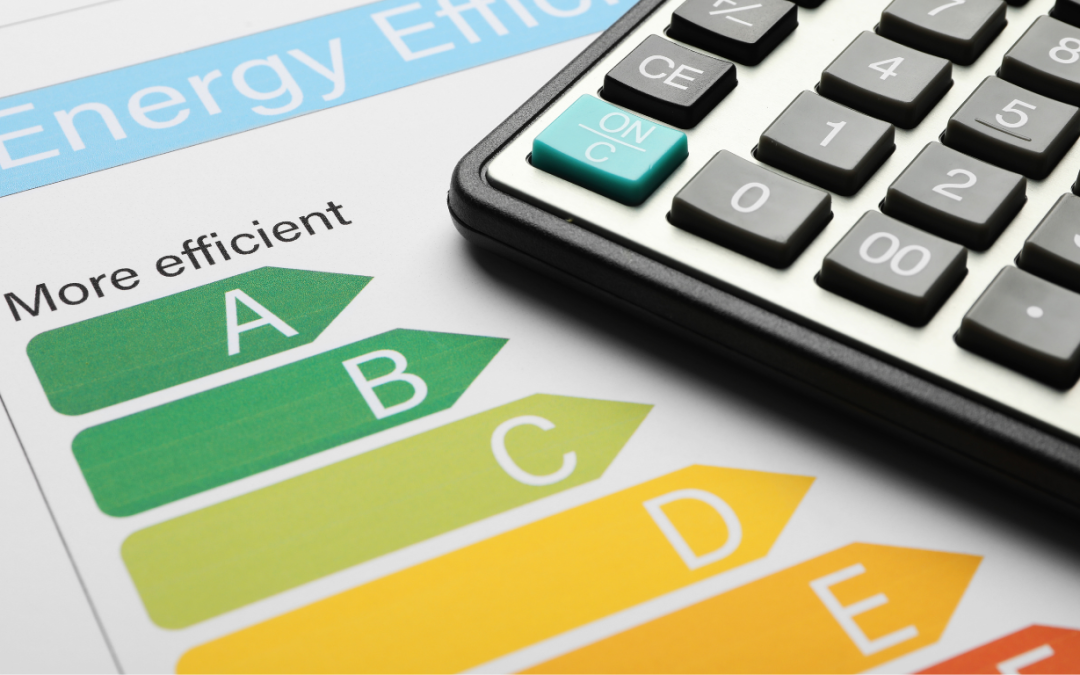
An Energy Performance Certificate (EPC) is an essential tool for assessing a property’s energy efficiency, helping residents understand their energy usage and potential savings. This EPC Factsheet explains how EPC ratings work, where to find your certificate, and why improving your rating can reduce energy costs and unlock access to grants and funding.
Whether you’re a homeowner, tenant, or landlord, this guide provides clear, practical information on EPCs and how they impact your property.
What is an EPC?
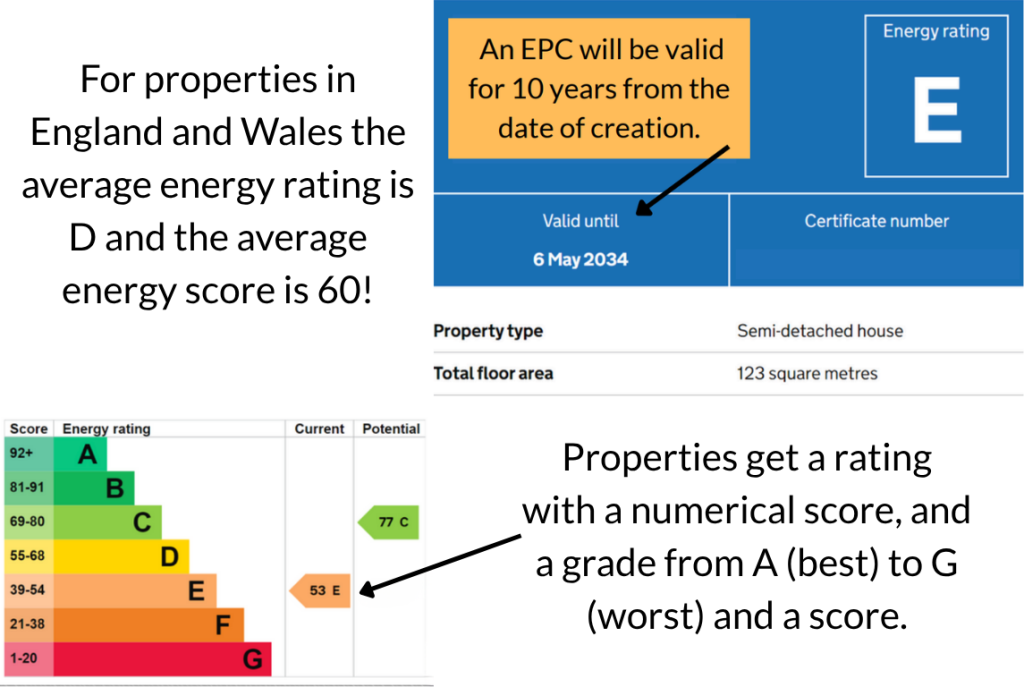
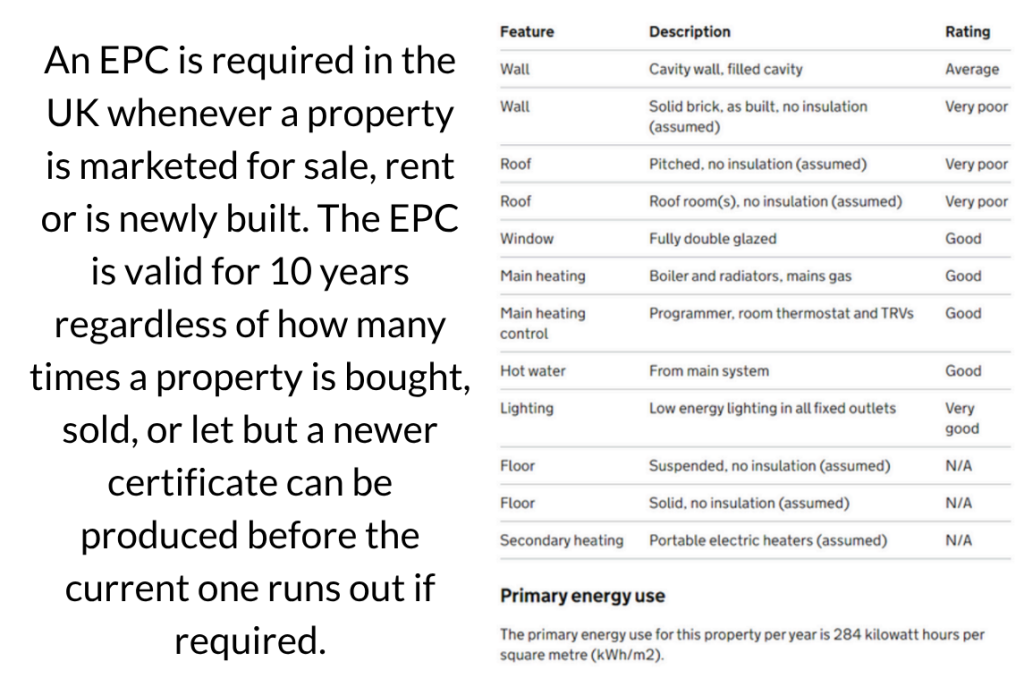
An EPC (Energy Performance Certificate) is the measurement of a property’s energy efficiency rating in relation to a property’s running costs. It takes into account the potential energy performance of the property itself (the fabric) and its services (heating, lighting, hot water etc).
In addition to this, the EPC document will also show:
- A breakdown of a property’s energy performance.
- Its environmental impact.
- Recommendations for improvements.
- Estimated energy use alongside potential savings.
Example EPC
Where can I find my EPC?
It is free to search and view at www.gov.uk/find-energy-certificate
How to get an EPC?
To get a new EPC for your property, you will need to find an accredited energy assessor. They will assess your property, produce the certificate and submit it so it is legally valid. This may be done only by an accredited Domestic Energy Assessor (DEA) or an On Construction Domestic Energy Assessor (OCDEA) depending on the property. These can cost between £35-120 (most typically they sit around £60).
Contact the Ministry of Housing, Communities and Local Government (MHCLG) if you need help with finding an EPC or accredited assessor.
MHCLG
mhclg.digital-services@communities.gov.uk
Telephone: 020 3829 0748
Monday to Friday, 9am to 5pm
What can be gained from reading the EPC?
The higher the score on the EPC the more energy efficient the property, and theoretically the lower the running costs for energy. Properties with a low EPC score can be expected to be paying much higher bills, and see where improvements can be made for a better score and efficiency.
An EPC is something that will often be a requirement to explore the possibility of local council funding and grants for improving energy efficiency in the home or affording energy, and will often be for properties of a D rating and lower. Having an in-date EPC can help access schemes like the Warm Home Discount, the Energy Company Obligation (ECO) scheme, the LA Flex scheme, the Great British Insulation Scheme (GBIS), the Home Upgrade Grant (HUG) and the Boiler Upgrade Scheme (BUS).
Final FAQs
What are the legal requirements of a landlord?
Government regulations require all rental properties to have an EPC rating of E or higher before being let to tenants. A landlord must ensure that an EPC is available for any potential tenant to look at. As of April 2018, it is unlawful to let a property in the UK with an EPC rating below an 'E' (unless an appropriate exemption is registered). Where the landlord has failed to comply with the Compliance Notice this could lead to a fine up to £2,000 and/or a Publication Penalty.
Do I need a new EPC if I change my boiler?
No it is not a necessity. But if you are a landlord you may benefit from a new EPC if you upgrade your boiler and it is more efficient then it could improve your property’s rating.